“A lot of people missed a very enriching evening.”
That’s how Nicolas FRUY mrics summed it up after this night.
And he wasn’t wrong.
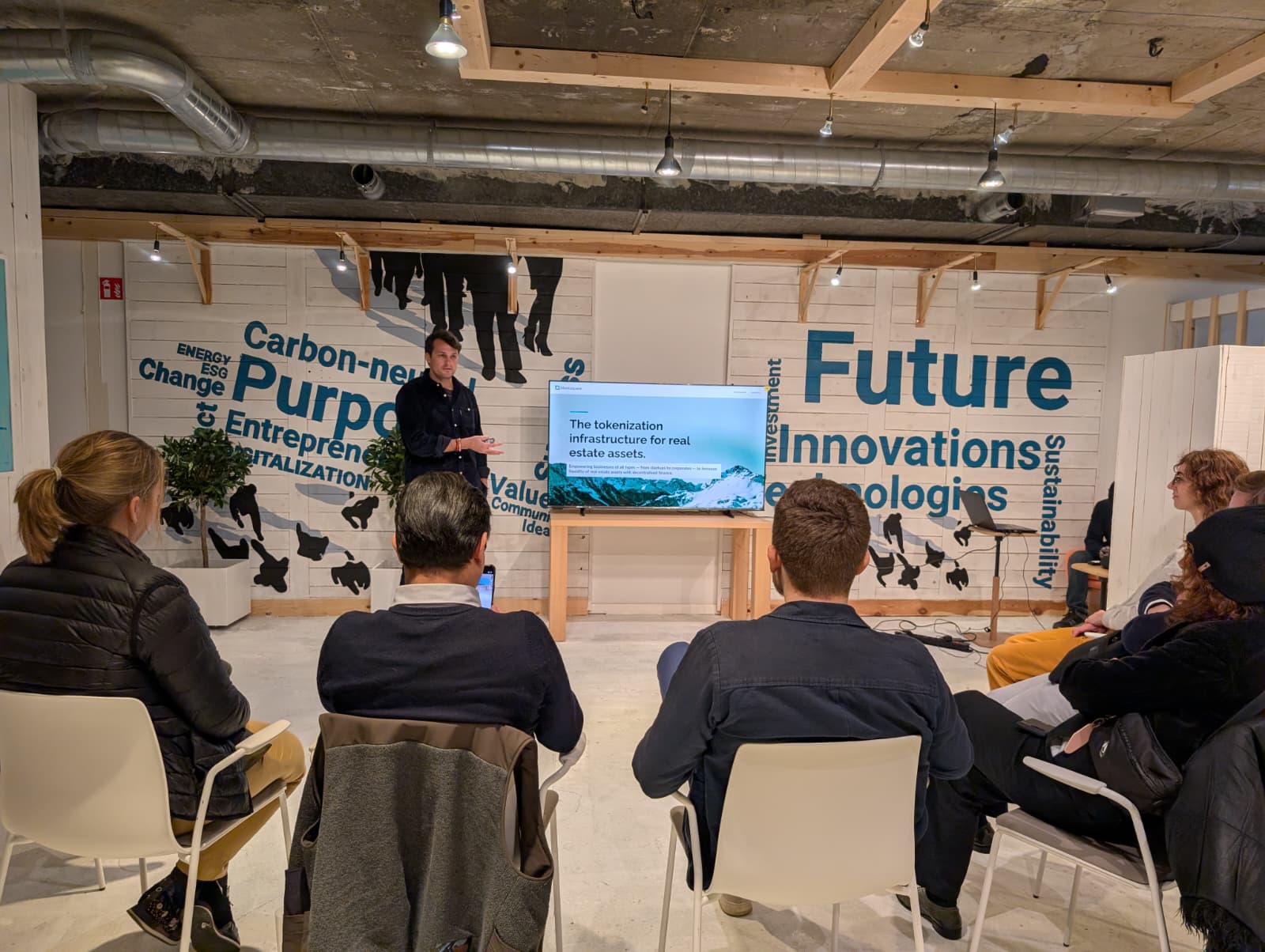
As part of 87 Capital & Market Meet, we hosted a closed-door roundtable with 15 senior professionals to dive deep into innovation trends at the intersection of real estate, investment, and finance. No stage, no slides-for-show—just sharp use cases, honest discussion, and practical insights.
Here’s what stood out.
1) Climate Risk = Portfolio Resilience
Insights by Nora Van Cauwenbergh (BitaGreen)
Sustainability is rapidly shifting from a values-driven narrative to a risk management discipline.
By combining minimal client data with satellite imagery and public datasets, BitaGreen assesses climate and nature risks at asset level—flooding, storms, heat stress, subsidence—then ranks portfolios to identify where intervention actually makes sense.
The key takeaway was clear:
Value preservation will increasingly depend on adaptation, not just mitigation.
Nature-based solutions—green roofs, urban trees, water retention zones—are no longer “nice to have.” When backed by ROI and cost–benefit analysis, they become credible investment decisions for both real estate owners and cities.
2) Feasibility & Pricing When Market Data Is Thin
Insights by Alexandre Verdonck (SmartBlock)
In many residential markets, reliable comparables are scarce—especially outside major cities.
Alexandre shared a concrete case from Ypres, where historical listing data from a large project database helped reduce uncertainty:
Refined pricing assumptions +4.5% versus the developer’s initial estimate
Estimated a realistic sales pace of ~1 unit/month
Tested the feasibility of a block sale via rental yields—ultimately showing it was unlikely to attract institutional investors
The bigger idea:
Data turns gut feeling into defendable assumptions, which is exactly what banks, investors, and partners need when capital is tight.
3) Tokenization & Liquidity for Real Assets
Insights by Denis Petrovcic (Blocksquare)
With global real estate capital concentrated in a handful of cities, smaller and secondary markets often suffer from chronic illiquidity.
Tokenization was discussed as a way to add a programmable, tradable layer to real assets:
Fractional ownership
Improved liquidity
New financing and exit options
Recent EU regulatory progress on crypto-assets is making these structures more realistic. Still, adoption will depend less on technology—and more on education, trust, and real demand.
Two Themes That Kept Coming Back
1) Data Fragmentation
The market is full of excellent point solutions. What’s still missing is true portfolio-wide, one-stop intelligence that decision-makers can actually use at speed.
2) Adoption Friction
Corporates want value—fast.
Startups need shorter trials, faster sales cycles, and clearer paths to recurring usage, not one-off analyses that never scale.
The Bigger Picture
We’re entering a far more selective era:
Less noise
Fewer experiments
Much more pressure on outcomes
Innovation in real estate finance is no longer about who has the biggest buzzwords.
It’s about who can consistently save time, reduce risk, unlock capital, or improve decision-making.
That’s what this evening was about—and why, indeed, a lot of people missed something special.