Reinventing the Rules of Construction & Real Estate in Luxembourg
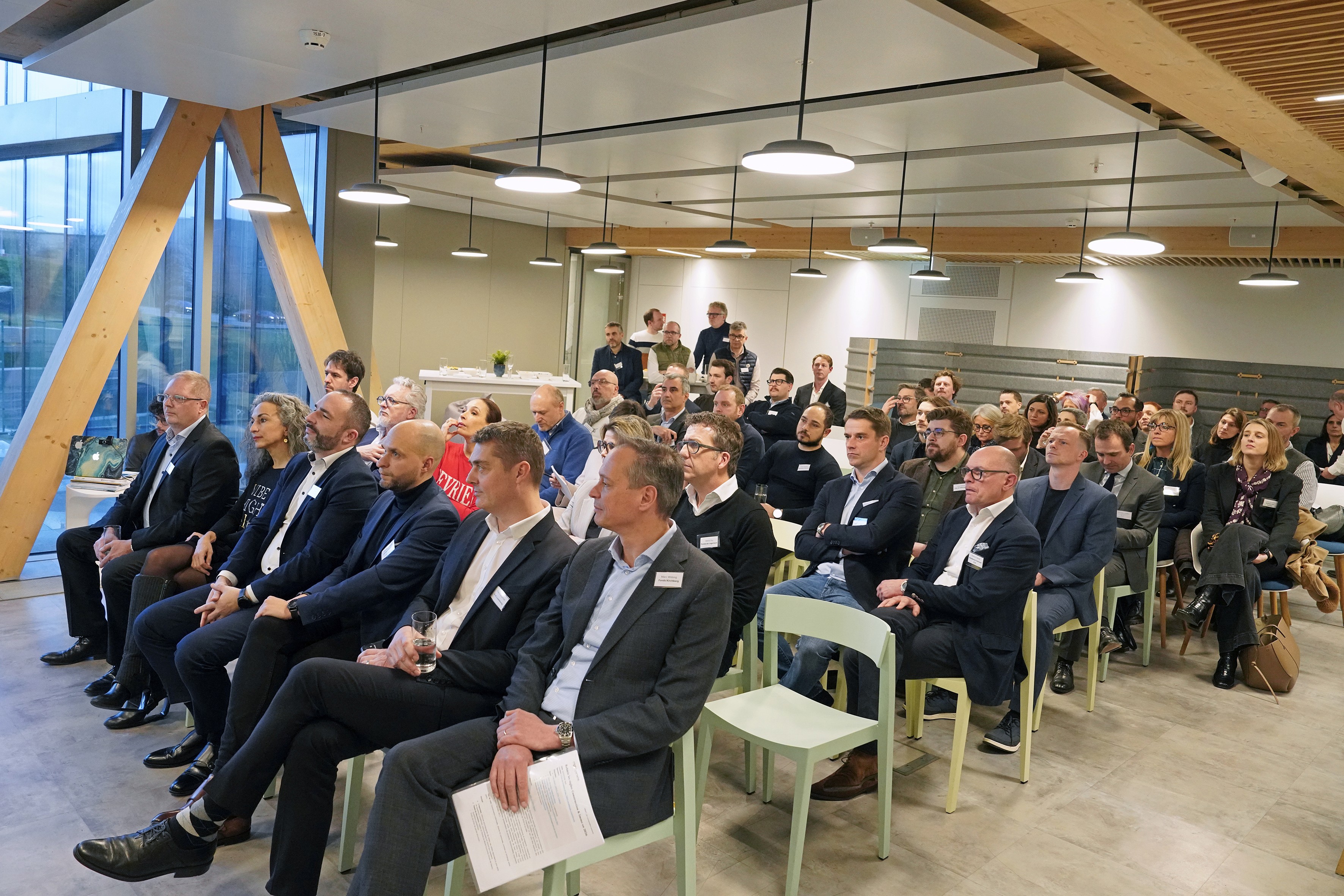
On February 12, 2026 we examined Luxembourg’s real estate crisis from every angle. The crisis is as much financial as it is psychological. The market needs balance, confidence, and a more predictable framework. The solutions exist; the challenge now is aligning stakeholders.
Actionable paths to overcome the crisis:
Partial public guarantee on equity for first-time buyers
Secured financing through to closed structural shell
Targeted tax measures to reactivate rental investment
Revision or phasing of multi-owner PAPs (detailed development plans)
Reform of real estate leasing / rent-to-buy (double registration issue)
Development of PPPs on public land
Simplification and greater predictability of urban planning procedures
Easier integration of dual-use zoning (reversibility)
Mechanisms aligning landlords and tenants on energy renovation
Yves Meert, MRICS, CFM (Colliers) presented:
Commercial market: Momentum returning (office recovery), logistics/industrial still tight due to lack of supply.
Residential: Existing housing has reached a price equilibrium (recent stabilization). VEFA (off-plan sales) is increasing in volume, partly driven by public intervention; the private sector remains fragile.
Core issue: The disappearance of investors (yield vs. risk-free rates, rental return framework).
Marc Widong (Fonds Kirchberg), Sébastien Labis (BPI Real Estate), Daniel Haag (Banque Internationale à Luxembourg – BIL), Shaaf Milani Dia (City of Luxembourg), and Pierre Wauthier (PwC Luxembourg) highlighted the following ideas:
1) VEFA: dead or transformed?
Consensus: not dead, but slower, more conditional, dependent on confidence, pre-sales, and sometimes public backing. “Liquid” typologies perform better, while high-end units (penthouses / >€1M) are harder to move.
2) Land: speculation vs. public interest (land ≠ buildings)?
Emphyteusis (long-term land lease) as an anti-speculation tool (Fonds Kirchberg). From a banking perspective, it is financeable but requires a clear framework for resale/pre-emption rights. For investors and valuation, land remains a strong cultural and financial collateral.
3) “Sustainable” projects: less profitable? Who pays?
There is tension between the idea that “sustainable ≠ less profitable” and the reality that pioneering projects are often more expensive and take longer. The underlying message: poor ESG quality will eventually come at a cost (valuation discounts/covenants).
4) Build for residents or investors?
Consensus: the new-build market needs a solid base of investors (roughly 30–35% mentioned). Levers include tax incentives and PPPs on public land.
5) Real estate reversibility: mandatory?
Key idea: regulatory complexity makes full reversibility difficult. A concrete redevelopment example showed that dual-use designation would have saved time. The focus should also be on circularity rather than perfect prediction.
6) Disruptive solutions to exit the crisis
Potential paths:
Innovative financing (bonds / broader investment vehicles with consumer protection)
Unlocking multi-owner PAPs (50% rule + appeals = predictability issue)
Leasing / rent-to-buy, if registration issues are resolved
Luc Arend (City of Differdange) closed by recalling the 2030 objectives: electrification, large-scale renovation, circularity, and mobility.
See more photo HERE